
Exploring the Latest Advances in Boiler Technology
Boiler technology has advanced remarkably over the past decade, transforming how we heat our homes. Today’s systems offer efficiency levels, control options and connectivity that would have seemed futuristic just ten years ago.

Why you can trust our content
We understand that the boiler industry can be confusing, with plenty of outdated or misleading information. That’s why we rely only on trusted, proven sources to guide our advice and installations:



At a glance
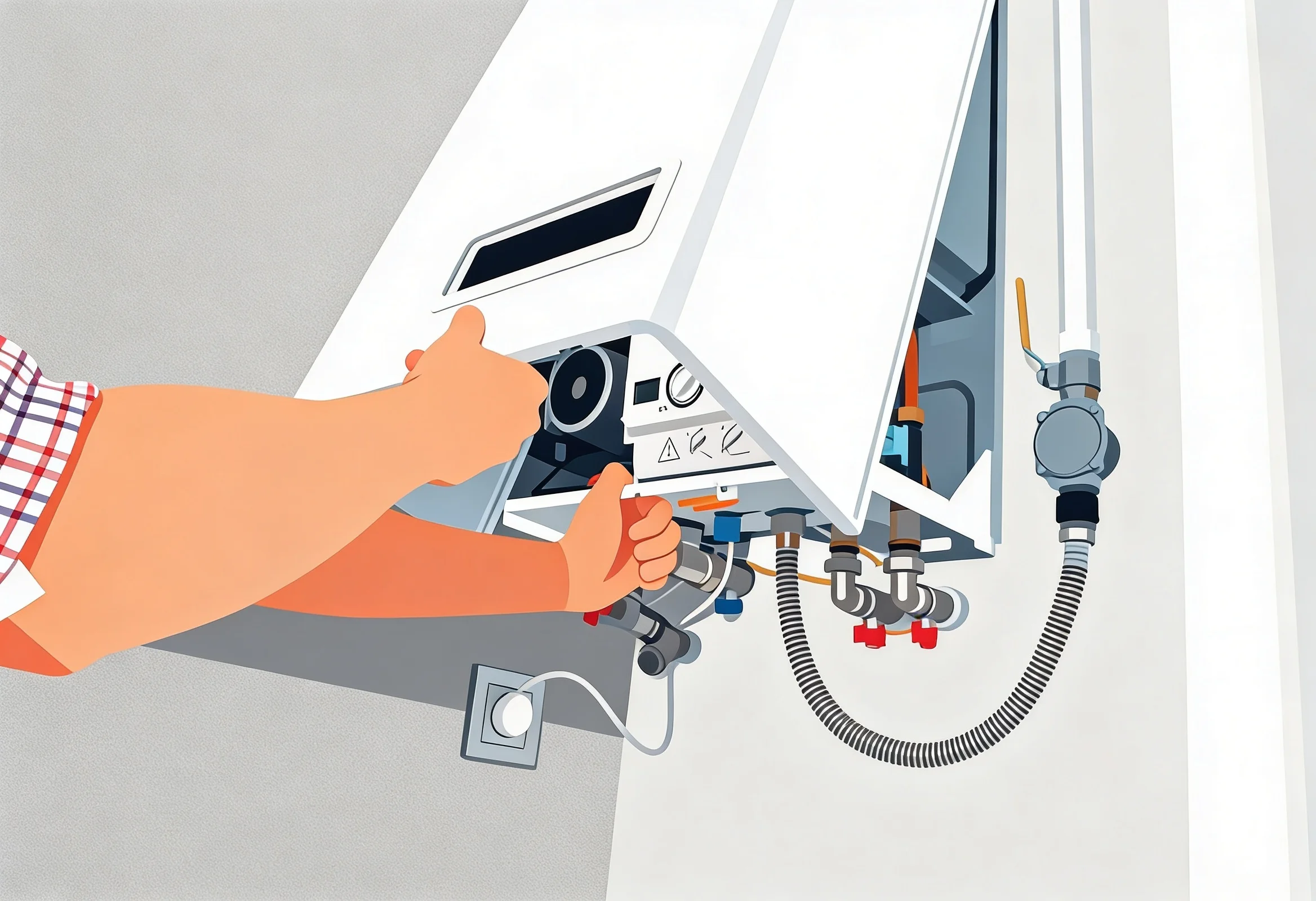
These innovations deliver tangible benefits beyond just technical specifications. They translate to lower energy bills, reduced environmental impact, enhanced convenience and greater reliability. Understanding the latest developments helps you recognise the advantages of modern systems and make informed decisions about heating upgrades.
In this guide, we’ll explore the key technological advances reshaping domestic heating. From smart connectivity and hydrogen readiness to efficiency improvements and advanced diagnostics, today’s boilers are sophisticated systems designed for performance, economy and future compatibility.
How Have Efficiency Standards Evolved?
The efficiency gap between older and modern boilers is substantial and continues to widen. Understanding these improvements helps illustrate why upgrading to current technology delivers meaningful savings.
Condensing technology revolutionised boiler efficiency when it became mandatory for new installations. Unlike older non-condensing boilers that allow hot exhaust gases to escape, condensing boilers capture this waste heat and use it to preheat cold water entering the system. This process boosts efficiency from around 70% in older boilers to 90% or higher in modern systems.
Modern condensing boilers feature larger heat exchangers and improved materials that maximise heat recovery. The latest models achieve efficiency ratings exceeding 94%, meaning almost all the fuel consumed converts to usable heat rather than being wasted.
Modulating burner technology represents another significant advance. Traditional boilers operate at full power until the target temperature is reached, then switch off. This cycling wastes energy and creates temperature fluctuations. Modulating boilers adjust their output continuously, matching heat production to demand precisely. They might operate at 30% capacity on mild days and ramp up to full power during cold snaps.
This modulation improves efficiency by reducing cycling losses and provides more consistent temperatures. The boiler runs for longer periods at lower outputs rather than repeatedly firing up to full power, which is inherently less efficient.
ErP ratings make efficiency comparisons straightforward. The Energy-related Products Directive requires manufacturers to label products with efficiency ratings from A+++ to G. All new boilers must achieve at least A-rated efficiency, but many manufacturers now offer A+ and A++ models that exceed minimum standards.
What Are Smart Controls?
The integration of smart technology into heating systems has transformed how homeowners interact with their boilers. These advances offer convenience, control and efficiency that traditional systems can’t match.
Smart thermostats connect to your home wifi network, enabling control via smartphone apps from anywhere. You can adjust temperatures, switch heating on or off and create detailed schedules without being at home. Forgot to turn the heating down before leaving for a week away? Adjust it remotely rather than wasting energy.
Learning capabilities distinguish advanced smart controls from basic programmable thermostats. Systems like Nest and Hive learn your routines and preferences over time, automatically adjusting schedules to match your lifestyle. They recognise when you typically leave for work or return home, optimising heating to be comfortable when you’re present and economical when you’re out.
Geofencing uses your smartphone’s location to trigger heating changes automatically. The system detects when you leave home and reduces heating, then senses your approach and warms the house before you arrive. This automation ensures comfort without manual intervention or wasted energy heating an empty property.
Weather compensation takes external temperature into account when determining boiler output. On mild days, the system reduces heating intensity, whilst cold weather triggers increased output. This responsive approach maintains consistent internal temperatures whilst minimising fuel consumption.
Energy monitoring through smart controls provides visibility of your heating consumption. You can track energy use patterns, identify inefficiencies and understand the impact of temperature adjustments on running costs. This transparency encourages more efficient heating behaviours and helps optimise settings for economy without sacrificing comfort.
If you’re interested in upgrading to a smart-controlled system, our team can explain how these technologies integrate with modern boilers and recommend options to suit your needs.
Let’s get started, Which fuel powers your boiler?
Mains Gas
LPG
It just takes 60 Sec
And then you can book a free consultation
Are Boilers Ready for Hydrogen Fuel?
Hydrogen compatibility represents one of the most significant developments in future-proofing heating systems. As the UK works towards decarbonising home heating, hydrogen is emerging as a potential replacement for natural gas.
Hydrogen-ready boilers can operate on natural gas now and be converted to run on hydrogen with relatively minor modifications when hydrogen becomes available through the gas network. This approach protects your investment by ensuring your heating system won’t become obsolete as fuel sources transition.
Several manufacturers now offer hydrogen-ready models that have been tested and certified for hydrogen operation. These boilers feature components and materials compatible with hydrogen’s different combustion characteristics. When hydrogen supply becomes available in your area, an engineer can retrofit the necessary components to enable hydrogen operation.
Hydrogen blends are likely to be introduced gradually. The gas network may initially carry blends of natural gas and hydrogen at 20% hydrogen content, increasing over time to pure hydrogen. Hydrogen-ready boilers accommodate this transition seamlessly without requiring immediate changes.
The timeline for widespread hydrogen availability remains uncertain. Current projections suggest hydrogen networks will be rolled out in phases over the coming decade, starting with trial areas. However, purchasing a hydrogen-ready boiler now provides reassurance that your system can adapt when hydrogen becomes available in your location.
Not all properties will necessarily transition to hydrogen. Heat pumps, district heating schemes and other technologies may be more suitable for some areas. The government’s approach to decarbonising heating will likely vary by region and property type. Despite this uncertainty, hydrogen-ready capability adds flexibility to your heating system’s future options.
What Improvements Have Been Made to Reliability?
Reliability advances mean modern boilers require fewer repairs and deliver more consistent performance throughout their lifespan. These improvements stem from better materials, refined manufacturing and enhanced component design.
Heat exchanger materials have evolved significantly. Stainless steel and aluminium heat exchangers resist corrosion better than older copper designs, particularly in areas with hard water. This durability extends boiler lifespan and reduces the likelihood of expensive heat exchanger failures.
Component quality across all boiler parts has improved. Manufacturers use better seals, more durable pumps and higher quality control components. These refinements reduce failure rates and mean fewer unexpected breakdowns requiring emergency callouts.
Factory testing and quality control measures are more rigorous than in the past. Boilers undergo extensive testing before leaving the factory, identifying potential issues before installation. This attention to quality at the manufacturing stage significantly reduces early-life failures.
Self-diagnostic capabilities help identify developing problems before complete failures occur. Modern boilers monitor their own performance continuously, detecting issues like ignition problems, sensor faults or unusual pressure readings. Early warning of developing problems allows proactive maintenance rather than reactive emergency repairs.
Frost protection features prevent freeze damage in cold weather. Boilers monitor temperature continuously and run pumps or fire the burner briefly if components approach freezing temperatures. This automatic protection prevents burst pipes and damaged components that plagued older systems during cold snaps.
What Safety Innovations Protect Your Home?
Safety advances have made modern boilers considerably safer than older systems. Multiple protection features work together to prevent dangerous situations and ensure secure operation.
Carbon monoxide detection is increasingly integrated into boiler systems. Some models include built-in CO sensors that alert you to dangerous gas levels and shut down the boiler automatically. This adds an extra safety layer beyond standard CO alarms, with the sensor positioned at the source of potential CO production.
Flame supervision devices ensure the gas supply cuts off immediately if the flame extinguishes unexpectedly. Modern systems use multiple sensors to verify combustion is occurring correctly. If any abnormality is detected, gas flow stops within milliseconds, preventing gas accumulation.
Overheat protection prevents boilers from reaching dangerous temperatures. Multiple temperature sensors monitor different parts of the system, shutting down operation if temperatures exceed safe limits. This protection safeguards both the boiler components and your property.
Pressure relief mechanisms prevent system over-pressurisation. Automatic pressure relief valves, expansion vessels and safety cut-offs work together to maintain safe pressure levels. If pressure rises beyond normal limits, the system responds automatically to prevent damage.
Gas Safe compliance and certification ensure every installation meets rigorous safety standards. Modern boilers incorporate features that align with current Building Regulations and gas safety requirements. Professional installation by Gas Safe registered engineers verifies these safety systems function correctly.
For professional advice on the latest boiler technology and how it applies to your property in Swansea, contact our experienced team for a detailed consultation.
How Are Boilers Becoming More Environmentally Friendly?
Environmental considerations increasingly influence boiler design as manufacturers work to reduce the carbon impact of home heating. Several technological approaches are reducing emissions and preparing for a lower-carbon future.
Reduced emissions result from more complete combustion and better temperature control. Modern burners achieve very low NOx emissions compared to older systems, improving local air quality. Precise combustion control minimises pollutants whilst maximising efficiency.
Compatibility with renewable heating additions allows integration with solar thermal systems, heat pumps and other low-carbon technologies. Hybrid systems combine a gas boiler with a heat pump, using the most efficient technology for current conditions. The boiler provides backup capacity during very cold weather whilst the heat pump handles normal heating demands efficiently.
Improved system efficiency directly reduces carbon emissions. Every percentage point of efficiency improvement means less fuel burned and fewer emissions produced. Modern boilers operating at 94% efficiency produce significantly less CO2 than 70% efficient older models delivering the same heat output.
Refrigerant management in heat pump systems uses low global warming potential refrigerants. Whilst this applies more to heat pumps than traditional boilers, hybrid systems incorporating heat pump technology benefit from these environmental improvements.
Smart controls reduce energy waste by ensuring heating only operates when needed. Precise scheduling, learning algorithms and responsive controls prevent unnecessary operation, directly reducing fuel consumption and associated emissions.
What Should You Look for in Your Next Boiler?
Understanding recent technological advances helps you identify which features deliver genuine value versus marketing hype. Focus on innovations that suit your circumstances and priorities.
Efficiency ratings remain fundamental. Choose an A-rated minimum, with A+ or A++ models offering further savings. The difference in running costs over 12-15 years can be substantial, potentially offsetting higher initial costs.
Smart compatibility suits most modern households. Even if you don’t want full smart control immediately, choosing a boiler that supports smart thermostats provides flexibility to add this functionality later when circumstances or preferences change.
Hydrogen readiness offers future flexibility in areas where hydrogen networks may be deployed. This feature adds minimal cost now but could be valuable as heating decarbonisation progresses over the coming decade.
Brand reputation and warranty terms protect your investment. Established manufacturers with comprehensive warranties and strong service networks provide greater security than budget options with minimal support.
Professional installation makes every technology perform as designed. Even the most advanced boiler will underperform if fitted incorrectly. Choose Gas Safe registered installers with experience fitting modern systems and ensuring all features work correctly.
Frequently Asked Questions
Recent advances in boiler technology deliver measurable improvements in efficiency, control, reliability and environmental impact. These innovations aren’t just technical specifications – they translate to real benefits in daily comfort, running costs and system longevity.
Modulating technology, smart controls and improved materials combine to create heating systems that are genuinely superior to previous generations. Features like hydrogen readiness and advanced diagnostics add future-proofing and convenience that extend value beyond immediate performance.
If you’re considering upgrading your heating system in the Swansea area, contact Geco Plumbing to discuss how the latest boiler technology can benefit your property. Our Gas Safe registered engineers stay current with industry developments and can recommend systems that deliver the performance, efficiency and features that suit your requirements and budget.
Related articles
Let’s get started, Which fuel powers your boiler?
Mains Gas
LPG
At a glance
These innovations deliver tangible benefits beyond just technical specifications. They translate to lower energy bills, reduced environmental impact, enhanced convenience and greater reliability. Understanding the latest developments helps you recognise the advantages of modern systems and make informed decisions about heating upgrades.
In this guide, we’ll explore the key technological advances reshaping domestic heating. From smart connectivity and hydrogen readiness to efficiency improvements and advanced diagnostics, today’s boilers are sophisticated systems designed for performance, economy and future compatibility.
How Have Efficiency Standards Evolved?
The efficiency gap between older and modern boilers is substantial and continues to widen. Understanding these improvements helps illustrate why upgrading to current technology delivers meaningful savings.
Condensing technology revolutionised boiler efficiency when it became mandatory for new installations. Unlike older non-condensing boilers that allow hot exhaust gases to escape, condensing boilers capture this waste heat and use it to preheat cold water entering the system. This process boosts efficiency from around 70% in older boilers to 90% or higher in modern systems.
Modern condensing boilers feature larger heat exchangers and improved materials that maximise heat recovery. The latest models achieve efficiency ratings exceeding 94%, meaning almost all the fuel consumed converts to usable heat rather than being wasted.
Modulating burner technology represents another significant advance. Traditional boilers operate at full power until the target temperature is reached, then switch off. This cycling wastes energy and creates temperature fluctuations. Modulating boilers adjust their output continuously, matching heat production to demand precisely. They might operate at 30% capacity on mild days and ramp up to full power during cold snaps.
This modulation improves efficiency by reducing cycling losses and provides more consistent temperatures. The boiler runs for longer periods at lower outputs rather than repeatedly firing up to full power, which is inherently less efficient.
ErP ratings make efficiency comparisons straightforward. The Energy-related Products Directive requires manufacturers to label products with efficiency ratings from A+++ to G. All new boilers must achieve at least A-rated efficiency, but many manufacturers now offer A+ and A++ models that exceed minimum standards.
What Are Smart Controls?
The integration of smart technology into heating systems has transformed how homeowners interact with their boilers. These advances offer convenience, control and efficiency that traditional systems can’t match.
Smart thermostats connect to your home wifi network, enabling control via smartphone apps from anywhere. You can adjust temperatures, switch heating on or off and create detailed schedules without being at home. Forgot to turn the heating down before leaving for a week away? Adjust it remotely rather than wasting energy.
Learning capabilities distinguish advanced smart controls from basic programmable thermostats. Systems like Nest and Hive learn your routines and preferences over time, automatically adjusting schedules to match your lifestyle. They recognise when you typically leave for work or return home, optimising heating to be comfortable when you’re present and economical when you’re out.
Geofencing uses your smartphone’s location to trigger heating changes automatically. The system detects when you leave home and reduces heating, then senses your approach and warms the house before you arrive. This automation ensures comfort without manual intervention or wasted energy heating an empty property.
Weather compensation takes external temperature into account when determining boiler output. On mild days, the system reduces heating intensity, whilst cold weather triggers increased output. This responsive approach maintains consistent internal temperatures whilst minimising fuel consumption.
Energy monitoring through smart controls provides visibility of your heating consumption. You can track energy use patterns, identify inefficiencies and understand the impact of temperature adjustments on running costs. This transparency encourages more efficient heating behaviours and helps optimise settings for economy without sacrificing comfort.
If you’re interested in upgrading to a smart-controlled system, our team can explain how these technologies integrate with modern boilers and recommend options to suit your needs.
Let’s get started, Which fuel powers your boiler?
Mains Gas
LPG
It just takes 60 Sec
And then you can book a free consultation
Are Boilers Ready for Hydrogen Fuel?
Hydrogen compatibility represents one of the most significant developments in future-proofing heating systems. As the UK works towards decarbonising home heating, hydrogen is emerging as a potential replacement for natural gas.
Hydrogen-ready boilers can operate on natural gas now and be converted to run on hydrogen with relatively minor modifications when hydrogen becomes available through the gas network. This approach protects your investment by ensuring your heating system won’t become obsolete as fuel sources transition.
Several manufacturers now offer hydrogen-ready models that have been tested and certified for hydrogen operation. These boilers feature components and materials compatible with hydrogen’s different combustion characteristics. When hydrogen supply becomes available in your area, an engineer can retrofit the necessary components to enable hydrogen operation.
Hydrogen blends are likely to be introduced gradually. The gas network may initially carry blends of natural gas and hydrogen at 20% hydrogen content, increasing over time to pure hydrogen. Hydrogen-ready boilers accommodate this transition seamlessly without requiring immediate changes.
The timeline for widespread hydrogen availability remains uncertain. Current projections suggest hydrogen networks will be rolled out in phases over the coming decade, starting with trial areas. However, purchasing a hydrogen-ready boiler now provides reassurance that your system can adapt when hydrogen becomes available in your location.
Not all properties will necessarily transition to hydrogen. Heat pumps, district heating schemes and other technologies may be more suitable for some areas. The government’s approach to decarbonising heating will likely vary by region and property type. Despite this uncertainty, hydrogen-ready capability adds flexibility to your heating system’s future options.
What Improvements Have Been Made to Reliability?
Reliability advances mean modern boilers require fewer repairs and deliver more consistent performance throughout their lifespan. These improvements stem from better materials, refined manufacturing and enhanced component design.
Heat exchanger materials have evolved significantly. Stainless steel and aluminium heat exchangers resist corrosion better than older copper designs, particularly in areas with hard water. This durability extends boiler lifespan and reduces the likelihood of expensive heat exchanger failures.
Component quality across all boiler parts has improved. Manufacturers use better seals, more durable pumps and higher quality control components. These refinements reduce failure rates and mean fewer unexpected breakdowns requiring emergency callouts.
Factory testing and quality control measures are more rigorous than in the past. Boilers undergo extensive testing before leaving the factory, identifying potential issues before installation. This attention to quality at the manufacturing stage significantly reduces early-life failures.
Self-diagnostic capabilities help identify developing problems before complete failures occur. Modern boilers monitor their own performance continuously, detecting issues like ignition problems, sensor faults or unusual pressure readings. Early warning of developing problems allows proactive maintenance rather than reactive emergency repairs.
Frost protection features prevent freeze damage in cold weather. Boilers monitor temperature continuously and run pumps or fire the burner briefly if components approach freezing temperatures. This automatic protection prevents burst pipes and damaged components that plagued older systems during cold snaps.
What Safety Innovations Protect Your Home?
Safety advances have made modern boilers considerably safer than older systems. Multiple protection features work together to prevent dangerous situations and ensure secure operation.
Carbon monoxide detection is increasingly integrated into boiler systems. Some models include built-in CO sensors that alert you to dangerous gas levels and shut down the boiler automatically. This adds an extra safety layer beyond standard CO alarms, with the sensor positioned at the source of potential CO production.
Flame supervision devices ensure the gas supply cuts off immediately if the flame extinguishes unexpectedly. Modern systems use multiple sensors to verify combustion is occurring correctly. If any abnormality is detected, gas flow stops within milliseconds, preventing gas accumulation.
Overheat protection prevents boilers from reaching dangerous temperatures. Multiple temperature sensors monitor different parts of the system, shutting down operation if temperatures exceed safe limits. This protection safeguards both the boiler components and your property.
Pressure relief mechanisms prevent system over-pressurisation. Automatic pressure relief valves, expansion vessels and safety cut-offs work together to maintain safe pressure levels. If pressure rises beyond normal limits, the system responds automatically to prevent damage.
Gas Safe compliance and certification ensure every installation meets rigorous safety standards. Modern boilers incorporate features that align with current Building Regulations and gas safety requirements. Professional installation by Gas Safe registered engineers verifies these safety systems function correctly.
For professional advice on the latest boiler technology and how it applies to your property in Swansea, contact our experienced team for a detailed consultation.
How Are Boilers Becoming More Environmentally Friendly?
Environmental considerations increasingly influence boiler design as manufacturers work to reduce the carbon impact of home heating. Several technological approaches are reducing emissions and preparing for a lower-carbon future.
Reduced emissions result from more complete combustion and better temperature control. Modern burners achieve very low NOx emissions compared to older systems, improving local air quality. Precise combustion control minimises pollutants whilst maximising efficiency.
Compatibility with renewable heating additions allows integration with solar thermal systems, heat pumps and other low-carbon technologies. Hybrid systems combine a gas boiler with a heat pump, using the most efficient technology for current conditions. The boiler provides backup capacity during very cold weather whilst the heat pump handles normal heating demands efficiently.
Improved system efficiency directly reduces carbon emissions. Every percentage point of efficiency improvement means less fuel burned and fewer emissions produced. Modern boilers operating at 94% efficiency produce significantly less CO2 than 70% efficient older models delivering the same heat output.
Refrigerant management in heat pump systems uses low global warming potential refrigerants. Whilst this applies more to heat pumps than traditional boilers, hybrid systems incorporating heat pump technology benefit from these environmental improvements.
Smart controls reduce energy waste by ensuring heating only operates when needed. Precise scheduling, learning algorithms and responsive controls prevent unnecessary operation, directly reducing fuel consumption and associated emissions.
What Should You Look for in Your Next Boiler?
Understanding recent technological advances helps you identify which features deliver genuine value versus marketing hype. Focus on innovations that suit your circumstances and priorities.
Efficiency ratings remain fundamental. Choose an A-rated minimum, with A+ or A++ models offering further savings. The difference in running costs over 12-15 years can be substantial, potentially offsetting higher initial costs.
Smart compatibility suits most modern households. Even if you don’t want full smart control immediately, choosing a boiler that supports smart thermostats provides flexibility to add this functionality later when circumstances or preferences change.
Hydrogen readiness offers future flexibility in areas where hydrogen networks may be deployed. This feature adds minimal cost now but could be valuable as heating decarbonisation progresses over the coming decade.
Brand reputation and warranty terms protect your investment. Established manufacturers with comprehensive warranties and strong service networks provide greater security than budget options with minimal support.
Professional installation makes every technology perform as designed. Even the most advanced boiler will underperform if fitted incorrectly. Choose Gas Safe registered installers with experience fitting modern systems and ensuring all features work correctly.
Frequently Asked Questions
Recent advances in boiler technology deliver measurable improvements in efficiency, control, reliability and environmental impact. These innovations aren’t just technical specifications – they translate to real benefits in daily comfort, running costs and system longevity.
Modulating technology, smart controls and improved materials combine to create heating systems that are genuinely superior to previous generations. Features like hydrogen readiness and advanced diagnostics add future-proofing and convenience that extend value beyond immediate performance.
If you’re considering upgrading your heating system in the Swansea area, contact Geco Plumbing to discuss how the latest boiler technology can benefit your property. Our Gas Safe registered engineers stay current with industry developments and can recommend systems that deliver the performance, efficiency and features that suit your requirements and budget.
Related articles
Let’s get started, Which fuel powers your boiler?
Mains Gas
LPG