
How to Choose the Right Boiler for Your Home in South Wales
Selecting the right boiler for your property in Glamorgan is one of the most important decisions you’ll make as a homeowner. Get it right and you’ll enjoy reliable heating, consistent hot water and efficient operation for 12-15 years. Get it wrong and you’ll face inadequate performance, higher running costs and potential system problems.

Why you can trust our content
We understand that the boiler industry can be confusing, with plenty of outdated or misleading information. That’s why we rely only on trusted, proven sources to guide our advice and installations:



At a glance
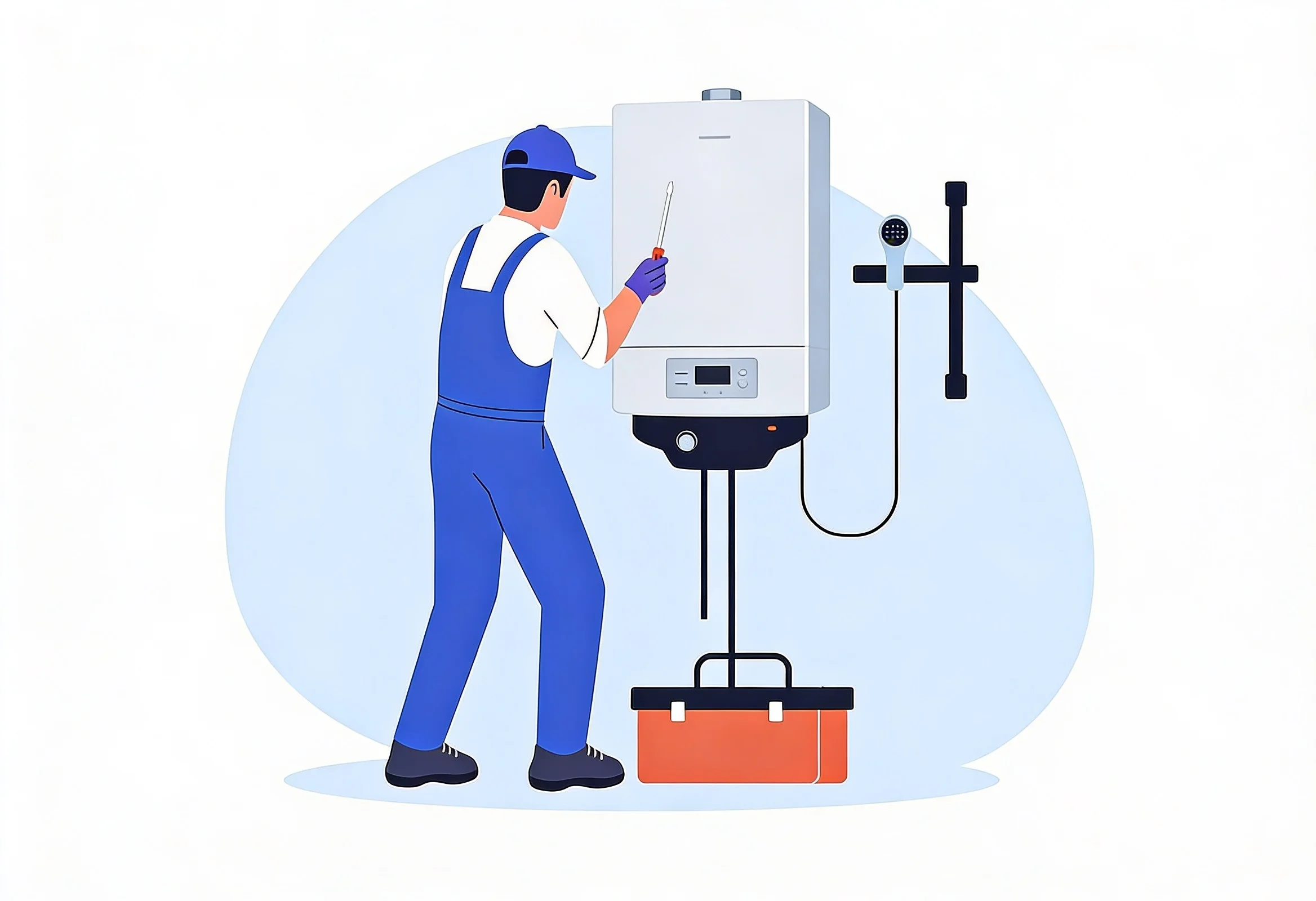
The challenge is that there’s no one-size-fits-all solution. What works perfectly for a compact two-bedroom flat will be completely inadequate for a four-bedroom family home. Factors like property size, hot water demands, existing system infrastructure and budget all influence which boiler type and model will serve you best.
This guide walks you through the key considerations and helps you understand how to match boiler specifications to your home’s requirements. Whether you’re replacing an aging system or planning a heating upgrade, you’ll gain the knowledge needed to make an informed choice.
What Are the Different Types of Boiler?
Understanding the three main boiler types is fundamental to making the right choice. Each system works differently and suits particular property types and usage patterns.
Combi boilers heat water on demand directly from the mains supply. They don’t require separate hot water cylinders or cold water tanks, making them compact and ideal for properties with limited space. When you turn on a hot tap, the boiler fires up and heats the water instantly. This efficiency makes them popular for smaller homes and apartments.
The main limitation of combi boilers is that they can only deliver hot water to one outlet at peak performance. If someone’s showering whilst someone else runs a hot tap, the flow rate and temperature may drop. This makes them less suitable for larger households with simultaneous hot water demands.
System boilers work with a cylinder that stores hot water. The boiler heats water and stores it in the cylinder, ready for use whenever needed. This setup allows multiple taps and showers to run simultaneously without pressure drops, making system boilers ideal for family homes with several bathrooms.
They require space for the cylinder but don’t need a cold water tank in the loft, as they take water directly from the mains. This makes them more compact than traditional systems whilst offering better hot water delivery than combi boilers.
Heat-only boilers, also called regular or conventional boilers, work with both a hot water cylinder and cold water storage tanks. They’re the traditional system type found in many older properties. Heat-only boilers suit large homes with high hot water demands and work particularly well where water pressure from the mains is low.
The complexity and space requirements make them less common in new installations, but they remain the best choice for certain properties, particularly period homes with existing conventional systems.
If you’re unsure which system type would work best for your property, our engineers can assess your needs during a free home survey.
How Do You Determine the Right Boiler Size?
Boiler size isn’t about physical dimensions – it refers to the output capacity measured in kilowatts. Getting this right is crucial for efficiency, comfort and running costs.
An undersized boiler will struggle to heat your home adequately and provide sufficient hot water. It’ll run constantly, particularly during cold weather, leading to higher fuel consumption and increased wear on components. You’ll experience slow heating times and potentially inadequate hot water during peak usage.
An oversized boiler cycles on and off frequently because it heats the system too quickly. This short cycling reduces efficiency, increases fuel consumption and causes unnecessary wear on components. It’s a waste of money both in the initial purchase and ongoing running costs.
Professional heat loss calculations determine the correct size. These calculations consider your property’s floor area, insulation levels, number of radiators, window sizes and hot water requirements. A qualified heating engineer will perform these calculations during a home survey.
As a rough guide, smaller flats typically need boilers around 24-28kW, average three-bedroom homes suit 28-34kW models and larger properties may require 35kW or more. However, these are very general figures – your specific requirements depend on your property’s unique characteristics.
Let’s get started, Which fuel powers your boiler?
Mains Gas
LPG
It just takes 60 Sec
And then you can book a free consultation
What Should You Consider About Hot Water Demands?
Your household’s hot water usage patterns significantly influence which boiler type and model will serve you best. Think about your typical daily routines and peak demand times.
Single or couple households with one bathroom have relatively modest hot water needs. A combi boiler typically provides adequate hot water flow for one shower or several taps running individually. The convenience of instant hot water without waiting for a cylinder to heat makes combis attractive for this scenario.
Families with children and multiple bathrooms need more capacity. Morning routines often involve several people showering in quick succession or simultaneously. A system boiler with an appropriately sized cylinder ensures hot water availability for everyone without lengthy waits between showers.
Consider your showering preferences too. Power showers require higher flow rates than standard showers. If you have or want power showers, this affects your system choice. Combi boilers need higher output ratings to deliver adequate flow to power showers, whilst system boilers can include pumps to boost pressure.
Bath usage affects cylinder sizing for system boilers. Large baths require substantial hot water volumes. If you regularly fill baths, particularly more than one per day, you’ll need a cylinder with sufficient capacity to meet this demand.
|
Property Type |
Typical Occupants |
Bathrooms |
Recommended System |
Reason |
|---|---|---|---|---|
|
Flat or small house |
1–2 people |
1 |
Combi boiler |
Space-saving, instant hot water, suitable for single bathroom |
|
Medium house |
2–3 people |
1–2 |
Combi or small system |
Depends on usage patterns and available space |
|
Family home |
3–4 people |
2–3 |
System boiler |
Handles multiple hot water demands efficiently |
|
Large house |
4+ people |
3+ |
System or heat-only |
Best for high demand and multiple bathrooms in use together |
Which Fuel Type Is Right for Your Property?
Fuel availability and cost are practical considerations that narrow your options considerably. The fuel type your property can access limits which boilers are suitable.
Gas boilers are the most common choice where mains gas is available. Natural gas is typically the most economical fuel option and gas boilers offer excellent efficiency, reliability and running costs. If your property has a gas connection, a gas boiler installation is almost always the practical choice.
Modern gas condensing boilers achieve efficiency ratings above 90%, converting almost all the fuel into usable heat. The infrastructure for gas servicing and repairs is well established, making maintenance straightforward and relatively affordable.
Oil boilers suit rural properties without mains gas connections. They require an oil storage tank on your property and regular fuel deliveries. Oil boilers can achieve similar efficiency to gas models but fuel costs are typically higher and fluctuate with oil prices. They’re a reliable option where gas isn’t available.
LPG boilers work similarly to gas boilers but use liquefied petroleum gas stored in a tank. They’re another alternative for properties without mains gas. LPG is more expensive than natural gas but offers convenience and reliability similar to gas systems.
Electric boilers are uncommon for whole-house heating due to running costs, but they have niche applications. They’re compact, quiet and don’t require flues or gas safety checks. However, electricity is considerably more expensive per kilowatt-hour than gas, making electric boilers economically unviable for most homes.
What Features and Controls Should You Consider?
Modern boilers offer various features and control options that affect performance, convenience and running costs. Understanding these helps you choose a system that matches your lifestyle.
Modulating technology adjusts the flame intensity to match heat demand precisely. Rather than operating at full power or switching off, modulating boilers run at partial power when less heat is needed. This improves efficiency and provides more consistent temperatures.
Smart controls and connectivity are increasingly standard. Many boilers work with smart thermostats that let you control heating remotely via smartphone apps. You can adjust temperatures, create detailed schedules and monitor energy usage from anywhere. This convenience also enables energy savings by ensuring heating only runs when needed.
Weather compensation adjusts boiler operation based on outside temperature. In milder weather, the boiler reduces its output automatically, maintaining comfort whilst minimising fuel consumption. This feature is particularly effective in modern well-insulated properties.
Built-in diagnostics help identify problems quickly. Modern boilers display error codes when issues occur, allowing engineers to diagnose faults efficiently. Some systems send fault notifications to your smartphone or directly to your heating company for proactive maintenance.
Quiet operation varies between models. If your boiler is in a bedroom cupboard or near living spaces, noise levels matter. Check specifications and reviews for information about operating noise, particularly if noise sensitivity is a concern.
Speak to an experienced heating engineer to discuss which features would benefit your household most and whether they justify any additional cost.
How Important Are Brand and Warranty?
Choosing a reputable manufacturer and understanding warranty terms protects your investment and ensures reliable long-term performance.
Established brands like Worcester Bosch, ATAG and Baxi have proven track records for reliability, build quality and customer support. They invest in research and development, resulting in boilers that incorporate the latest efficiency and control technologies. Their extensive service networks mean parts availability and engineer expertise are rarely issues.
Budget brands may offer lower initial costs but can present challenges. Parts may be harder to source, fewer engineers are familiar with them and build quality may not match premium manufacturers. The apparent savings can be offset by reliability issues and higher maintenance costs.
Warranty length indicates manufacturer confidence. Premium boilers typically include warranties of seven to ten years, whilst budget models may offer just two to three years. Extended warranties often require annual servicing by an approved installer, so factor this ongoing cost into your decision.
Warranty terms vary significantly. Some cover parts and labour, whilst others cover parts only. Some warranties require specific water treatment measures like scale reducers or magnetic filters. Read the warranty terms carefully and ensure your installer meets all requirements for the warranty to remain valid.
Installation quality affects warranty validity. Most manufacturers require Gas Safe registered installation and compliance with their specific fitting instructions. Using a qualified, reputable installer protects your warranty and ensures your boiler operates as designed.
What About Installation Complexity and Cost?
Installation considerations affect both the feasibility of different options and the overall project cost. Understanding these factors helps set realistic expectations.
Like-for-like replacements are the most straightforward and economical. If you’re replacing a combi boiler with another combi in the same location, installation is relatively quick and simple. The existing pipework, gas supply and flue connections can often be reused with minimal modification.
System conversions involve more work and cost. Converting from a conventional system with tanks and cylinder to a combi requires removing the old components, potentially moving pipework and adapting the system. Converting from a combi to a system boiler requires installing a cylinder and associated pipework.
Boiler relocation adds complexity and cost. If you want to move your boiler to a different location, additional pipework, gas supply extension and new flue installation are necessary. This can be worthwhile for freeing up space or improving access but increases the project scope significantly.
Flue considerations affect boiler placement. Modern boilers require specific flue types and arrangements. The flue must terminate in a suitable location away from windows, doors and boundaries. Flue length limitations and routing requirements may dictate where the boiler can be sited.
Existing system condition influences costs. If your current heating system has issues like corroded pipes, sludge buildup or inadequate radiators, addressing these problems during boiler replacement makes sense. A powerflush or system upgrades increase initial costs but protect your new boiler and improve overall performance.
Frequently Asked Questions
Choosing the right boiler involves balancing system type, capacity, features and budget to match your property’s requirements. There’s no universally best boiler – only the best boiler for your specific situation.
Focus on getting the fundamentals right: correct system type for your hot water needs, appropriate capacity for your property size and a reputable manufacturer with solid warranty terms. Features and controls enhance the experience but shouldn’t override these core considerations.
For expert guidance on selecting the perfect boiler for your home in Bridgend, contact Geco Plumbing. Our Gas Safe registered engineers will assess your property, discuss your requirements and recommend options that deliver reliable performance for years to come, with finance options available to help manage the investment.
Related articles
Let’s get started, Which fuel powers your boiler?
Mains Gas
LPG
At a glance
The challenge is that there’s no one-size-fits-all solution. What works perfectly for a compact two-bedroom flat will be completely inadequate for a four-bedroom family home. Factors like property size, hot water demands, existing system infrastructure and budget all influence which boiler type and model will serve you best.
This guide walks you through the key considerations and helps you understand how to match boiler specifications to your home’s requirements. Whether you’re replacing an aging system or planning a heating upgrade, you’ll gain the knowledge needed to make an informed choice.
What Are the Different Types of Boiler?
Understanding the three main boiler types is fundamental to making the right choice. Each system works differently and suits particular property types and usage patterns.
Combi boilers heat water on demand directly from the mains supply. They don’t require separate hot water cylinders or cold water tanks, making them compact and ideal for properties with limited space. When you turn on a hot tap, the boiler fires up and heats the water instantly. This efficiency makes them popular for smaller homes and apartments.
The main limitation of combi boilers is that they can only deliver hot water to one outlet at peak performance. If someone’s showering whilst someone else runs a hot tap, the flow rate and temperature may drop. This makes them less suitable for larger households with simultaneous hot water demands.
System boilers work with a cylinder that stores hot water. The boiler heats water and stores it in the cylinder, ready for use whenever needed. This setup allows multiple taps and showers to run simultaneously without pressure drops, making system boilers ideal for family homes with several bathrooms.
They require space for the cylinder but don’t need a cold water tank in the loft, as they take water directly from the mains. This makes them more compact than traditional systems whilst offering better hot water delivery than combi boilers.
Heat-only boilers, also called regular or conventional boilers, work with both a hot water cylinder and cold water storage tanks. They’re the traditional system type found in many older properties. Heat-only boilers suit large homes with high hot water demands and work particularly well where water pressure from the mains is low.
The complexity and space requirements make them less common in new installations, but they remain the best choice for certain properties, particularly period homes with existing conventional systems.
If you’re unsure which system type would work best for your property, our engineers can assess your needs during a free home survey.
How Do You Determine the Right Boiler Size?
Boiler size isn’t about physical dimensions – it refers to the output capacity measured in kilowatts. Getting this right is crucial for efficiency, comfort and running costs.
An undersized boiler will struggle to heat your home adequately and provide sufficient hot water. It’ll run constantly, particularly during cold weather, leading to higher fuel consumption and increased wear on components. You’ll experience slow heating times and potentially inadequate hot water during peak usage.
An oversized boiler cycles on and off frequently because it heats the system too quickly. This short cycling reduces efficiency, increases fuel consumption and causes unnecessary wear on components. It’s a waste of money both in the initial purchase and ongoing running costs.
Professional heat loss calculations determine the correct size. These calculations consider your property’s floor area, insulation levels, number of radiators, window sizes and hot water requirements. A qualified heating engineer will perform these calculations during a home survey.
As a rough guide, smaller flats typically need boilers around 24-28kW, average three-bedroom homes suit 28-34kW models and larger properties may require 35kW or more. However, these are very general figures – your specific requirements depend on your property’s unique characteristics.
Let’s get started, Which fuel powers your boiler?
Mains Gas
LPG
It just takes 60 Sec
And then you can book a free consultation
What Should You Consider About Hot Water Demands?
Your household’s hot water usage patterns significantly influence which boiler type and model will serve you best. Think about your typical daily routines and peak demand times.
Single or couple households with one bathroom have relatively modest hot water needs. A combi boiler typically provides adequate hot water flow for one shower or several taps running individually. The convenience of instant hot water without waiting for a cylinder to heat makes combis attractive for this scenario.
Families with children and multiple bathrooms need more capacity. Morning routines often involve several people showering in quick succession or simultaneously. A system boiler with an appropriately sized cylinder ensures hot water availability for everyone without lengthy waits between showers.
Consider your showering preferences too. Power showers require higher flow rates than standard showers. If you have or want power showers, this affects your system choice. Combi boilers need higher output ratings to deliver adequate flow to power showers, whilst system boilers can include pumps to boost pressure.
Bath usage affects cylinder sizing for system boilers. Large baths require substantial hot water volumes. If you regularly fill baths, particularly more than one per day, you’ll need a cylinder with sufficient capacity to meet this demand.
|
Property Type |
Typical Occupants |
Bathrooms |
Recommended System |
Reason |
|---|---|---|---|---|
|
Flat or small house |
1–2 people |
1 |
Combi boiler |
Space-saving, instant hot water, suitable for single bathroom |
|
Medium house |
2–3 people |
1–2 |
Combi or small system |
Depends on usage patterns and available space |
|
Family home |
3–4 people |
2–3 |
System boiler |
Handles multiple hot water demands efficiently |
|
Large house |
4+ people |
3+ |
System or heat-only |
Best for high demand and multiple bathrooms in use together |
Which Fuel Type Is Right for Your Property?
Fuel availability and cost are practical considerations that narrow your options considerably. The fuel type your property can access limits which boilers are suitable.
Gas boilers are the most common choice where mains gas is available. Natural gas is typically the most economical fuel option and gas boilers offer excellent efficiency, reliability and running costs. If your property has a gas connection, a gas boiler installation is almost always the practical choice.
Modern gas condensing boilers achieve efficiency ratings above 90%, converting almost all the fuel into usable heat. The infrastructure for gas servicing and repairs is well established, making maintenance straightforward and relatively affordable.
Oil boilers suit rural properties without mains gas connections. They require an oil storage tank on your property and regular fuel deliveries. Oil boilers can achieve similar efficiency to gas models but fuel costs are typically higher and fluctuate with oil prices. They’re a reliable option where gas isn’t available.
LPG boilers work similarly to gas boilers but use liquefied petroleum gas stored in a tank. They’re another alternative for properties without mains gas. LPG is more expensive than natural gas but offers convenience and reliability similar to gas systems.
Electric boilers are uncommon for whole-house heating due to running costs, but they have niche applications. They’re compact, quiet and don’t require flues or gas safety checks. However, electricity is considerably more expensive per kilowatt-hour than gas, making electric boilers economically unviable for most homes.
What Features and Controls Should You Consider?
Modern boilers offer various features and control options that affect performance, convenience and running costs. Understanding these helps you choose a system that matches your lifestyle.
Modulating technology adjusts the flame intensity to match heat demand precisely. Rather than operating at full power or switching off, modulating boilers run at partial power when less heat is needed. This improves efficiency and provides more consistent temperatures.
Smart controls and connectivity are increasingly standard. Many boilers work with smart thermostats that let you control heating remotely via smartphone apps. You can adjust temperatures, create detailed schedules and monitor energy usage from anywhere. This convenience also enables energy savings by ensuring heating only runs when needed.
Weather compensation adjusts boiler operation based on outside temperature. In milder weather, the boiler reduces its output automatically, maintaining comfort whilst minimising fuel consumption. This feature is particularly effective in modern well-insulated properties.
Built-in diagnostics help identify problems quickly. Modern boilers display error codes when issues occur, allowing engineers to diagnose faults efficiently. Some systems send fault notifications to your smartphone or directly to your heating company for proactive maintenance.
Quiet operation varies between models. If your boiler is in a bedroom cupboard or near living spaces, noise levels matter. Check specifications and reviews for information about operating noise, particularly if noise sensitivity is a concern.
Speak to an experienced heating engineer to discuss which features would benefit your household most and whether they justify any additional cost.
How Important Are Brand and Warranty?
Choosing a reputable manufacturer and understanding warranty terms protects your investment and ensures reliable long-term performance.
Established brands like Worcester Bosch, ATAG and Baxi have proven track records for reliability, build quality and customer support. They invest in research and development, resulting in boilers that incorporate the latest efficiency and control technologies. Their extensive service networks mean parts availability and engineer expertise are rarely issues.
Budget brands may offer lower initial costs but can present challenges. Parts may be harder to source, fewer engineers are familiar with them and build quality may not match premium manufacturers. The apparent savings can be offset by reliability issues and higher maintenance costs.
Warranty length indicates manufacturer confidence. Premium boilers typically include warranties of seven to ten years, whilst budget models may offer just two to three years. Extended warranties often require annual servicing by an approved installer, so factor this ongoing cost into your decision.
Warranty terms vary significantly. Some cover parts and labour, whilst others cover parts only. Some warranties require specific water treatment measures like scale reducers or magnetic filters. Read the warranty terms carefully and ensure your installer meets all requirements for the warranty to remain valid.
Installation quality affects warranty validity. Most manufacturers require Gas Safe registered installation and compliance with their specific fitting instructions. Using a qualified, reputable installer protects your warranty and ensures your boiler operates as designed.
What About Installation Complexity and Cost?
Installation considerations affect both the feasibility of different options and the overall project cost. Understanding these factors helps set realistic expectations.
Like-for-like replacements are the most straightforward and economical. If you’re replacing a combi boiler with another combi in the same location, installation is relatively quick and simple. The existing pipework, gas supply and flue connections can often be reused with minimal modification.
System conversions involve more work and cost. Converting from a conventional system with tanks and cylinder to a combi requires removing the old components, potentially moving pipework and adapting the system. Converting from a combi to a system boiler requires installing a cylinder and associated pipework.
Boiler relocation adds complexity and cost. If you want to move your boiler to a different location, additional pipework, gas supply extension and new flue installation are necessary. This can be worthwhile for freeing up space or improving access but increases the project scope significantly.
Flue considerations affect boiler placement. Modern boilers require specific flue types and arrangements. The flue must terminate in a suitable location away from windows, doors and boundaries. Flue length limitations and routing requirements may dictate where the boiler can be sited.
Existing system condition influences costs. If your current heating system has issues like corroded pipes, sludge buildup or inadequate radiators, addressing these problems during boiler replacement makes sense. A powerflush or system upgrades increase initial costs but protect your new boiler and improve overall performance.
Frequently Asked Questions
Choosing the right boiler involves balancing system type, capacity, features and budget to match your property’s requirements. There’s no universally best boiler – only the best boiler for your specific situation.
Focus on getting the fundamentals right: correct system type for your hot water needs, appropriate capacity for your property size and a reputable manufacturer with solid warranty terms. Features and controls enhance the experience but shouldn’t override these core considerations.
For expert guidance on selecting the perfect boiler for your home in Bridgend, contact Geco Plumbing. Our Gas Safe registered engineers will assess your property, discuss your requirements and recommend options that deliver reliable performance for years to come, with finance options available to help manage the investment.
Related articles
Let’s get started, Which fuel powers your boiler?
Mains Gas
LPG